




15%
MRO Inventory Reduction

20%
Maintenance Productivity Gain

50%
Unplanned Downtime Reduction

4 - 6 Months
Investment Payback Period










Value Drivers
Products
Services
Knowledge
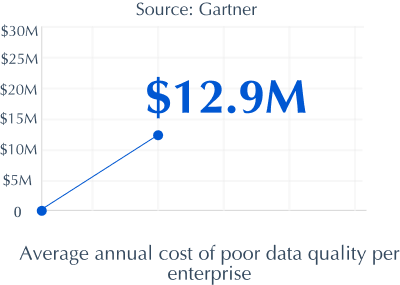
Chemical manufacturers are especially sensitive to data quality because every material carries critical technical, safety, environmental, and regulatory attributes that must remain accurate and consistent across the enterprise. Poor-quality data can quickly cascade into operational and compliance risks. PiLog’s data quality and master‑data management solutions address the underlying data‑integrity issues that often trigger such costly events.
Every one of these challenges has a data root cause. PiLog DQG Suite addresses each systematically – not as a one-off project, but as a sustained governance program.
Inaccurate or distributed Safety Data Sheets (SDS), missing chemical substance registries, and poorly governed compliance documentation create massive Environmental, Health, and Safety (EHS) vulnerabilities. Without a single, governed source of truth for chemical properties and classifications, companies risk severe regulatory penalties, product recalls, and catastrophic operational safety failures.
Average corporate cost per regulatory non- compliance penalty
Fragmented vendor master data, unharmonized material codes for raw chemical feeds, and incorrect hazard classification data lead to severe logistics bottlenecks. Inaccurate lead times and missing storage requirements (such as temperature or pressure controls) in the material master result in costly demurrage fees, bulk material spoilage, and operational disruptions across the supply chain.
Annual excess spend on logistics demurrage charges
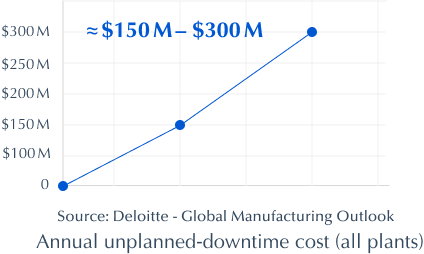
Unreliable asset master data, inaccurate (BOMs) for critical valves or pumps, and incomplete maintenance history for highly corrosive environments contribute directly to unplanned shutdowns. In chemical manufacturing, predictive maintenance algorithms and real-time process safety layers completely fail if the underlying asset registry and equipment taxonomies cannot be trusted.
Production revenue lost per hour of unplanned hazardous process downtime
Inconsistent product and material master records across multiple manufacturing plants prevent the seamless scaling of standard operating procedures (SOPs). Duplicate records for chemical additives and unstandardized units of measure break recipe synchronization between the enterprise layer (ERP) and plant execution systems (MES), severely delaying time-to-market for new chemical products.
Delay in new product introductions and multi – plant rollouts due to data reconciliation tabs
Deloitte’s chemical manufacturing outlook positions AI as a strategic tool for maximizing batch yields, cutting unplanned process downtime, and optimizing energy consumption. But AI models covering predictive asset maintenance, formulation adjustments, and hazardous material tracking require consistent equipment hierarchies, enriched material master records, and standardized chemical substance taxonomies.
Gartner predicts 60% of AI projects without AI-ready data will be abandoned by 2026. For complex, asset-heavy chemical processing plants, the financial fallout of failed AI pilots is amplified. PiLog DQG Suite creates the governed data foundation that moves AI from a costly experimental pilot to reliable, scalable production value.
without AI-ready data infrastructure (Gartner)
of expected ROI due to poor data quality (Deloitte 2024)
when data prep time drops from 80% to 20%
achieved by PiLog clients vs. 30% industry average
Every capability in PiLog DQG Suite is domain-specific, built for the complexity of offshore platforms, remote terminals, and multi-facility EAM environments.
PiLog DQG Suite establishes ISO 14224 and ISA-95 compliant asset structures, normalizes failure codes across high-pressure reactors and blending facilities, links Equipment BOMs to spare part masters, and enables full lifecycle costing. This creates the data foundation for Overall Equipment Effectiveness (OEE) dashboards and predictive maintenance programs that actually work.
Reduction in Unplanned Downtime
Annual savings for typical Chemical operator
OEE: world-class target from <70% industry average
Maintenance cost reduction via predictive approach
PiLog DQG Suite deduplicates MRO records across petrochemical complexes and regional formulation plants, applies ISO 14224 standards for consistent cross-facility materials management, and eliminates the duplicate and obsolete spares that tie up working capital. The result is fewer emergency POs, lower hazardous material freight costs, and capital released from inventory.
MRO inventory reduction (BCG benchmark)
Reduction in emergency purchase orders
Working capital released per $100M inventory
Typical investment payback period
Chemical operators upgrading to SAP S/4HANA face significant migration risk from complex legacy formulations, batch-management data histories, and toxic asset records. As an SAP Endorsed App, PiLog DQG Suite ensures Clean Core compliance, 95%+ data accuracy at cutover, and on-time go-live avoiding the costly post-go-live remediation that affects 70% of uncleansed migrations.
Data accuracy at go-live cutover
Project overruns and remediation costs avoided
Go-live achieved with PiLog DQG Suite vs. 30% timeline slips
Lower post-migration error rates in supply chain transactions
PiLog DQG Suite creates AI-ready chemical manufacturing data pipelines with standardized equipment masters, enriched sensor metadata, and governed maintenance histories. This enables AI programs for predictive molecular batch yields, recipe optimization, and Environmental Health and Safety (EHS) risk analytics to move from failed pilot to production ROI, in an industry where 74% of AI initiatives currently fall short due to poor data quality.
AI project success rate with PiLog DQG Suite vs. 30% industry average
Data scientist productivity (data prep time reduced 80% → 20%)
Supply chain cost reduction via AI (McKinsey benchmark)
Faster AI time-to-value vs. 12 - 24 month AI pilots
The only MDM platform built specifically for asset-intensive industries – with 50M+ golden records, ISO 8000 and ISO 14224 adherence, and 300+ enterprise integrations. Every O & G capability described above runs on PiLog DQG Suite.
These are not projected estimates: they are benchmark outcomes achieved across PiLog’s Chemicals client base
MRO Inventory Reduction
Maintenance Productivity Gain
Unplanned Downtime Reduction
Investment Payback Period
Let us quantify the downtime, maintenance leakage, and inventory waste in your specific chemicals
environment and build a business case for fixing it.
The same data lifecycle management expertise applied to the specific challenges of your industry.
Oil & Gas
Mining & Metals
Manufacturing
Cement & Construction
Airport & Aviation
Defense & Education
Data Centers & Telco
Utilities
Pharma & Life Sciences
Retail
Food & Beverage
Products
Services
Knowledge
Please fill in your details and our team will contact you shortly.
Please fill in your details and our industry expert will contact you shortly.