
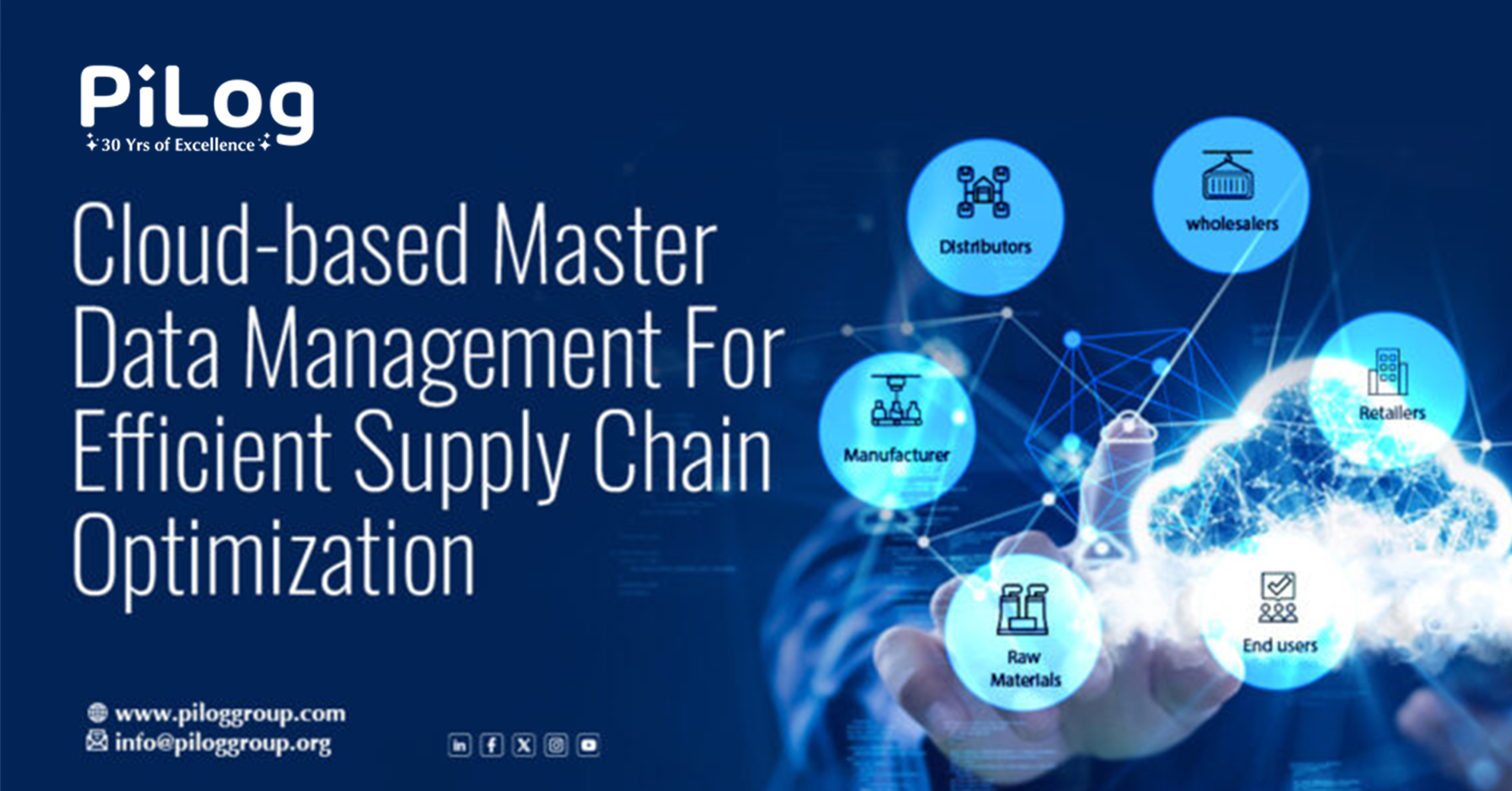
The supply chain is a complex network of products (raw materials, goods, and inventory), people (producers, distributors or wholesalers, retailers, customers or consumers), money (transactions), and information. The more complex the supply chain, the more critical it is for businesses to manage and stay ahead of the curve. So, companies must adopt a strategy or tool such as a master data management solution that tackles all the challenges a supply chain encounters. Before delving into the tool, let’s understand the supply chain management challenges.
Cloud-based Master Data Management For Efficient Supply Chain Optimization
Despite having traditional supply chain management systems, businesses face many challenges in streamlining the supply process. Here are some common hurdles faced by the supply chain without proper data management.
Stockouts & Overstocking
There are many factors such as inadequate demand forecasting, lack of proper communication, poor inventory control, and unreliable suppliers that lead to stockouts and overstocking.
Order Fulfilment
The order fulfilment chain starts from receiving goods from manufacturers to order processing to shipping to the customer. In this process, incorrectly filled orders, miscommunication, stockouts, inventory inaccuracy, and time-consuming packing are the key factors that lead to order fulfilment challenges.
Warehousing & Distribution
Incorrect stock counts, assignment of incorrect data to a commodity, and mismanaged inventory data will lead to warehousing and distribution challenges.
All the aforementioned challenges impact businesses a lot. However, worry not!. Have cloud-based master data management as a solution!. Master Data Management (MDM) and supply chain digitization are going to impact this industry in 2024 and beyond!.
Let’s first understand what is master data management and how to leverage cloud platforms for managing these complex supply chains.
First things first.
What are the challenges faced by supply chain management systems?
The supply chain master data can be categorized into four types of master data, namely,
- Supplier master data (suppliers’ details, contact information, contract terms, performance metrics)
- Material master data (classification, description, units of measure)
- Inventory master data (inventory levels and stock movement details)
- Logistics master data (locations of manufacturing sites, warehouses, and distribution centers)
What is supply chain master data?
Cloud Master data management is managing an organization’s data assets on the cloud on a unified platform. Cloud platform facilitates scalability, flexibility, and affordability for ever-changing data volumes and business requirements. All the data from different sources will be gathered in a centralized location where it can be accessed and managed by all the teams of a business. They will be in sync with the updated and accurate information which will lead to better decision-making. Thus, MDM ensures data is consistent, accurate, and accessible.
MDM includes data integration, data harmonization, data governance, data quality management, and data analytics. That’s why, many use master data management for its high performance, risk mitigation capabilities, better data insights, and improved customer experience.
What is cloud-based master data management?
Let’s understand how MDM Cloud solutions pave the way for addressing these supply chain management challenges and improving efficiency and productivity.
Centralize & Synchronize Data
All the master data related to products, goods, manufacturers, suppliers, consumers, locations, etc. will be stored on a unified platform where all teams of a business can manage and access data in real-time. Thus, it eliminates data inconsistencies, silos, and duplicates and ensures accuracy, consistency, and availability across the supply chain. This ensures
- Holistic view of all the supply chain data under one roof
- Updated & Real-time stock
- No duplicate records of commodities
- Accurate inventory and stock counts
- Appropriate data assignement to goods.
Data Quality & Governance
Cloud-based master data management platforms often come with robust data quality tools and unparalleled governance frameworks. The accuracy and timeliness of data are critical in supply chain management, and these solutions aid in ensuring data consistency, integrity, and regulatory compliance.
Improved Collaboration
As all the master data related to the supply chain is in a centralized repository on the cloud, all the people who are involved in the end-to-end supply chain like stakeholders and retailers can access the same information and collaborate effectively. This leads to real-time updates, efficient inventory forecasts, reduced errors, improved operational efficiency, and better decision-making.
Scalability & Flexibility
As mentioned earlier, cloud solutions provide scalability to handle huge volumes of supply chain data and can accommodate the changes and growth in the supply chain ecosystem. Coming to flexibility, industries can utilize any deployment model such as private, public, or hybrid; access either APIs or web-based interfaces; and stakeholders can access data from anywhere without compromising on data quality and security.
Analytics & Insights
Organizations can glean in-depth insights through advanced analytics and reporting capabilities of cloud-based master data management. Also, they can optimize processes, improve overall performance, identify trends, and predict demand.
Affordability
Cloud-based MDM solutions are cost-effective when compared to traditional on-premise deployments. Businesses won’t have the burdens of IT infrastructure and maintenance. This allows them to concentrate on their core business rather than supply chain activities.
Security & Data Protection
We can have 100% assurance on cloud platforms as it comes with unparalleled data privacy and security features such as access controls, encryption, and regular audits. Besides, it complies with industry standards and regulations. So, organizations need not bother about unauthorized access and data breaches.
How can you overlook such a powerful and efficient data management solution that revamps your supply chain optimization and helps you grow your business without effort?. Choose the right vendor or tool to streamline and optimize your complex supply chain.
Prioritizing MDM to tackle ongoing uncertainty in the supply chain:
It is critical to choose the right master data management solutions or tools as every business requires unique strategies for their data management. The selection depends on factors such as ease of use, scalability, features, integrations of AI/ML-enabled tools, efficiency, flexibility, cost, and overall performance of the system. If you are still unable to decide, seek an expert master data management consultation. They will guide you through the process and help you pick the best MDM tool
How to choose the right MDM tools?
Frequently Asked Questions
PiLog centralizes fragmented data from ERP, EAM, and IoT systems into a single source of truth. This provides unified visibility into supplier performance, material specifications, equipment, and inventory across global sites, eliminating data silos and enabling real-time synchronization.
By leveraging accurate master data and advanced analytics, PiLog enables precise demand forecasting and inventory planning. It ensures spare parts are correctly classified and linked to equipment and maintenance requirements, helping optimize stock levels, reduce carrying costs, and prevent production delays.
Yes. PiLog integrates seamlessly with SAP S/4HANA, SAP MDG, Oracle, and other enterprise platforms. It acts as a central data hub, ensuring master data for materials, suppliers, equipment, and logistics remains consistent and accurate across connected systems.
PiLog uses AI-driven tools such as MirAI and robust governance frameworks to cleanse, standardize, and validate supplier and material data. It enforces industry standards such as ISO 8000 to improve accuracy, consistency, traceability, and regulatory compliance across asset-intensive supply chains.
PiLog provides secure, role-based access to trusted master data for engineering, procurement, maintenance, suppliers, logistics, and other stakeholders. This enables real-time collaboration and information sharing, improving responsiveness, reducing errors, and keeping supply chain activities aligned.
MirAI analyzes historical and current supply chain data to identify trends, inefficiencies, and potential bottlenecks. It can support inventory planning, warehouse optimization, and logistics decisions, helping asset-intensive organizations reduce operational costs and improve material availability and delivery performance.
PiLog’s Cloud MDM incorporates enterprise-grade security measures, including encryption, role-based access controls, and governance mechanisms. These controls help protect sensitive supplier, material, operational, and supply chain information while supporting organizational security and compliance requirements.
Organizations can achieve significant efficiency gains through reduced inventory costs, fewer stockouts, improved data quality, and faster order fulfillment. By providing accurate, real-time supply chain information, PiLog helps organizations make better decisions, reduce operational disruptions, and improve overall asset and supply chain performance.
Wrapping Up:
To sum up, cloud-based master data management solutions are a boon for intricate supply chains as they streamline all operations from procurement to manufacturing to logistics to inventory management. In addition, they improve efficiency, enhance data accuracy, and accelerate decision-making.
How can PiLog help?
Being a leader in providing top-notch master data management solutions, PiLog helps businesses of all verticals in their digital transformation journey. Reach our expert professionals who specialize in various data management strategies. They will evaluate your requirements and recommend suitable Master Data Management platforms based on your business objectives for successful MDM implementation. We also offer services and add-ons mentioned below:
- Data quality management
- PiLog Preferred Records
- PiLog Preferred Hierarchy
- PiLog Preferred Ontology
- Lean data governance