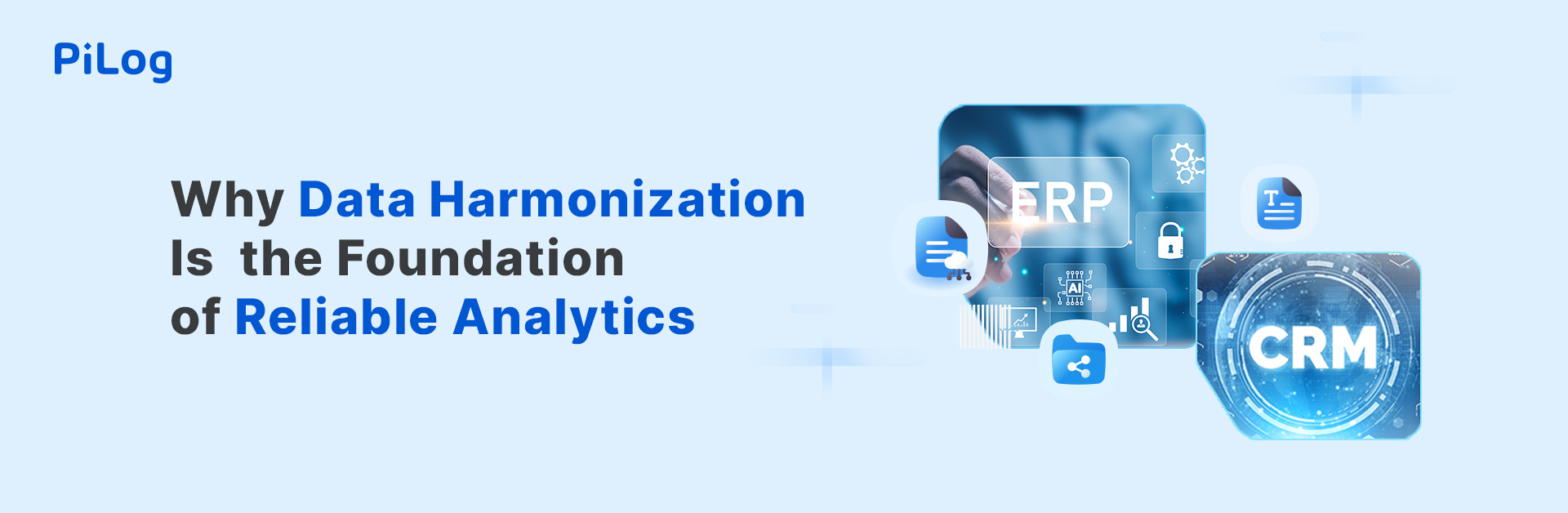
What Is Data Harmonization and Why Does It Matter?

Data drives every decision in digital enterprises, but only harmonized data delivers the accuracy, consistency, and reliability that organizations truly need.

When information lives in silos stored in different systems, formats, or languages it becomes fragmented and unreliable. This fragmentation leads to reporting errors, inefficiencies, and poor business decisions.

Ask the Experts

What Is Data Harmonization?

Data Harmonization is the process of transforming and aligning data from multiple systems such as ERP, CRM, and supply chain platforms into one standardized structure. It ensures that every dataset speaks the same language across your enterprise.

By harmonizing data, businesses can:

  • Eliminate inconsistencies and duplication
  • Improve reporting accuracy and analytics
  • Strengthen compliance and audit readiness
  • Drive confident, data-based decisions

That’s where PiLog leads the way. With ISO-certified standards, an extensive iContent Foundry, and AI-powered harmonization tools , PiLog helps enterprises create one trusted version of truth across global operations.
What Is a Data Harmonization Framework?

A Data Harmonization Framework defines how organizations structure, standardize, and maintain their data to ensure consistency across departments, systems, and regions.

It combines methodology, technology, and governance principles to align data quality , classification, and compliance efforts.

Key Components of a Strong Data Harmonization Framework

🧹

Data Cleansing

Remove duplicates and errors for reliable information.

⚙️

Standardization

Align data attributes, units, and naming conventions.

📚

Classification & Taxonomy

Organize data for easier access and scalability.

Enrichment

Add missing attributes from verified, trusted sources.

🔗

Validation & Integration

Ensure harmonized data fits seamlessly into enterprise systems.

PiLog enhances this process through ISO-compliant frameworks that keep your enterprise data consistent, trusted, and contextual.

How Does the Data Harmonization Process Work?

PiLog’s Data Harmonization Process bridges strategy and execution, transforming scattered, inconsistent data into accurate, validated, and actionable insights.

Step-by-Step Process

01

Data Collection

Gather datasets from ERP, CRM, and legacy systems.

02

Cleansing & Deduplication

AI automatically detects and corrects anomalies.

03

Standardization & Classification

iContent Foundry templates accelerate standardization.

04

Enrichment & Validation

Missing attributes are added and verified to ensure completeness.

05

Integration & Governance

Harmonized data integrates into enterprise systems like SAP.

With PiLog’s AI Lens, data anomalies are detected early and corrected automatically — turning unreliable data into a trusted, strategic business asset.

What to Look for in Data Harmonization Software

Choosing the right Data Harmonization Software is critical for success. Enterprises need more than just a data cleansing tool — they need automation, scalability, and seamless integration.

Essential Capabilities

  • AI-powered automation to reduce manual intervention
  • Smooth integration with   ERP , SAP, and cloud environments
  • ISO-compliant   data governance   for consistency
  • Predefined taxonomies for faster onboarding
  • Scalable architecture for enterprise-wide growth

PiLog’s Data Harmonization Software delivers all these capabilities and more. As a Premium SAP Partner , it ensures trusted integration with enterprise systems and offers:

  • ISO Standards Compliance – Guaranteeing transparency and quality
  • iContent Foundry – Access to over 25 million standardized templates
  • AI Lens – Intelligent automation for anomaly detection & smart enrichment
  • Proven Global Recognition – Trusted by leading organizations worldwide

These strengths make PiLog’s Data Harmonization Software one of the most comprehensive and reliable platforms for achieving true data clarity and control.

Case Study

A global enterprise struggled with duplicate material records and inconsistent descriptions across regional systems. This inconsistency affected procurement accuracy and slowed reporting.

Case Study Image

By implementing PiLog’s Data Harmonization Framework, powered by AI Lens and iContent Foundry, the organization achieved:

  • Clean, unified records across multiple regions
  • Consistent classification through standardized templates
  • Full ISO compliance for audit and reporting readiness
  • Seamless SAP integration for real-time visibility

The result was a trusted, sustainable data foundation that improved operations, compliance, and decision-making at every level.

FAQs

1. What is the main goal of Data Harmonization?
The main goal of Data Harmonization is to create a single, consistent version of data across all enterprise systems. It ensures that information is accurate, reliable, and standardized, enabling better analytics, decision-making, and governance.

2. How does Data Harmonization improve business efficiency?
By removing duplicates, aligning data formats, and correcting inconsistencies, Data Harmonization streamlines processes and reduces manual data work. It enables teams to make faster, more confident decisions based on unified, trusted data.

3. What are the key steps in the Data Harmonization Process?
The key steps include data collection, cleansing, standardization, enrichment, validation, and system integration. Together, these stages transform scattered data into clean, consistent, and actionable information that supports business growth.

4. How does AI support the Data Harmonization Process?
AI automates the detection of errors, duplicates, and missing attributes within datasets. It accelerates cleansing and standardization, ensuring data remains accurate and ready for integration across enterprise systems like ERP or SAP.

5. What makes PiLog’s Data Harmonization Software different?
PiLog’s software stands out for its ISO-certified frameworks, AI Lens for intelligent automation, and access to over 25 million templates through the iContent Foundry. These unique capabilities enable fast, accurate, and scalable harmonization across global systems.

Conclusion

When your data is aligned, everything else follows from faster decisions to better reporting and smoother collaboration.

That’s the real power of Data Harmonization, transforming fragmented information into a single, reliable source of truth.

PiLog makes this transformation seamless with:

  • ISO-certified frameworks for accuracy and governance
  • iContent Foundry for rapid standardization
  • AI Lens for real-time anomaly detection and correction
  • SAP-certified integration for enterprise connectivity

With PiLog, organizations can simplify complexity, unify systems, and make confident, data-driven decisions.

Ready to harmonize your enterprise data?

Transform your business with PiLog’s AI-driven Data Harmonization Framework built for accuracy, scalability, and trust.

Schedule a consultation today.

Contact Us